
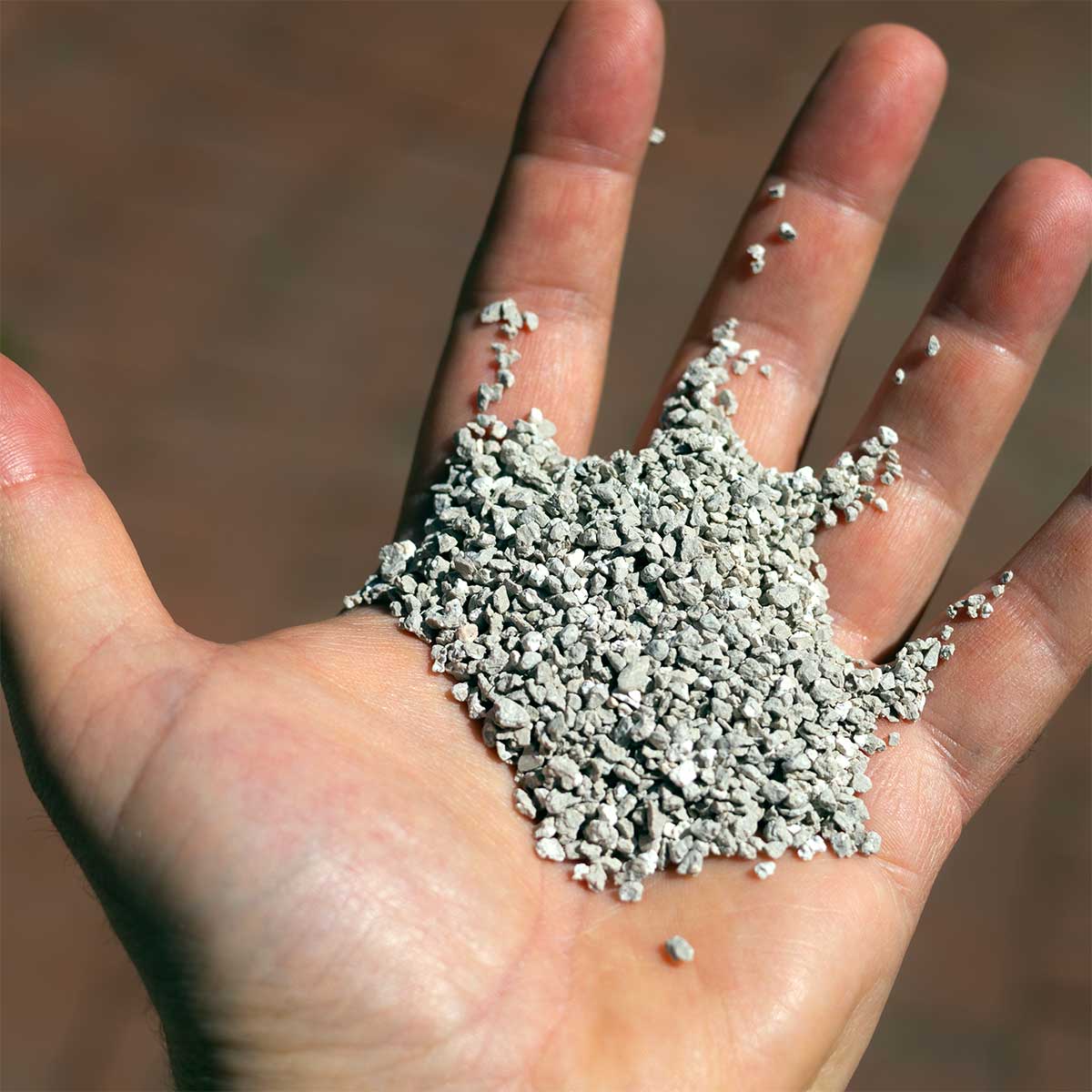
What Is a Desiccant?
A desiccant is a material that pulls water out of the air
A desiccant doesn't dry things by heating them or blowing air over them. It holds water vapour on its own surface — a process called adsorption — so the air inside a sealed space ends up with less moisture in it than it started with. Lower humidity means less of the condensation that causes rust, mould, mildew, spotting and that stale closed-up smell.
That last part matters: a desiccant only works in an enclosed space. A packet in a sealed box, case, safe or shipping crate can meaningfully dry the air it's trapped with. The same packet in an open room is trying to treat an effectively unlimited volume of air and will do nothing you can measure. Open rooms need a powered dehumidifier; enclosed spaces are where desiccants win.
The four desiccants you'll actually encounter
Silica gel — the little beads in a shoebox. Amorphous silicon dioxide, very high capacity at high humidity, cheap, and the default for small consumer packets. Regenerating it properly takes fairly high heat.
Clay (montmorillonite) — a naturally occurring absorbent clay, mined rather than manufactured. Lower capacity than silica gel at very high humidity, but it performs well at normal and cooler temperatures, costs less, is non-toxic, and regenerates at a low enough temperature to do in a household oven. This is what Sta-Dri packs are.
Calcium chloride — the crystals in a tub-style moisture absorber. It is deliquescent: it absorbs many times its own weight and dissolves into a liquid brine as it works. Highest capacity by a wide margin, but it produces a corrosive liquid that must be contained and thrown away, which makes it a poor choice sitting on top of anything you care about.
Molecular sieve — a synthetic zeolite with a precisely sized pore structure. It holds water tightly even at very low humidity, which makes it the choice when you need extremely dry conditions. It's expensive and needs high heat to regenerate.
Which one should you use?
- Protecting metal, optics, leather, paper or electronics in a sealed container — clay or silica gel. Both are solid and stay solid, so nothing can leak onto what you're storing.
- Pulling a lot of water out of a damp space fast, where spillage doesn't matter — calcium chloride, in a container built to hold the brine.
- Very low humidity targets (below roughly 10–15% RH) — molecular sieve.
- Anything you want to reuse rather than rebuy — clay or silica gel. Calcium chloride is consumed as it works and cannot be regenerated.
The most common mistake is choosing on absorption capacity alone. A desiccant that holds more water but turns to liquid is the wrong tool for a case of machined parts, no matter how the numbers compare.
Desiccant units and military specifications
Industrial buyers rarely specify desiccant by weight. They specify it in units, where a unit is defined by how much water vapour the desiccant will actually take up at a stated humidity and temperature. Two packs of the same weight can hold very different amounts of water, so weight alone tells you little.
The reference point most often cited is the US military desiccant specification, MIL-D-3464, which sets out the adsorption performance, packaging and testing requirements a desiccant has to meet for military storage and transport. Buyers in defence, aerospace and export packaging routinely specify against it.
Sta-Dri states that its packs exceed US military storage specifications. Under that specification a desiccant unit absorbs at least 3 grams of water vapour at 20% RH and 6 grams at 40% RH, and a unit of Sta-Dri is one ounce (28.35 grams). For quantities, sizing against a specific standard, or documentation, get in touch about bulk orders.
How much desiccant do you need?
Work from the volume of the enclosed space, not the size of the room it sits in. A practical working rule is 1 pound of clay desiccant per 13.3 cubic feet of sealed space.
Treat every sealed container separately. A storage tote holds its own air regardless of what the surrounding room is doing, which is why one large pack in the room does far less good than several small ones inside the containers. To size a specific space, use the Sta-Dri calculator.
Can desiccant be reused?
It depends on the type. Clay and silica gel are adsorbents — they hold water on their surface and release it again when heated, so they can be dried out and reused. Calcium chloride is not: it dissolves as it works and has to be replaced.
Sta-Dri packs regenerate in a conventional oven and are rated for up to three cycles. See the recharging instructions.
A spent pack needs no special disposal: the fill is plain montmorillonite clay with no additives or chemicals. That is not true of calcium chloride products, which leave a corrosive brine that has to be contained.
Desiccant Tips
- StaDri, our desiccant packets, will draw moisture from around the treatment area.
- Because moisture rises, our Sta-Dri pouches should be higher up in the treatment area.
- Treatment areas for Sta-Dri should be contained or sealed to prolong effectiveness.
- Sta-Dri exceeds the Method II packaging performance standards of MIL-P-116F, which hold a package below 40% RH at 77°F (25°C) for 18 months to two years.
- For best performance, use 1 pound per 13.3 cubic feet of space to be treated.
- An SD-32 is 32 ounces or 2 lbs and will treat about 26.5 cubic feet — roughly 3’x3’x3’.
- Use an electric dehumidifier for large areas or those containing a constant water source.
- For best performance, protected spaces should be closed up or sealed to prevent additional moisture.
Desiccant Uses
RECHARGEABLE MONTMORILLONITE CLAY, MADE IN THE USA
STA-DRI DESICCANT PACKS
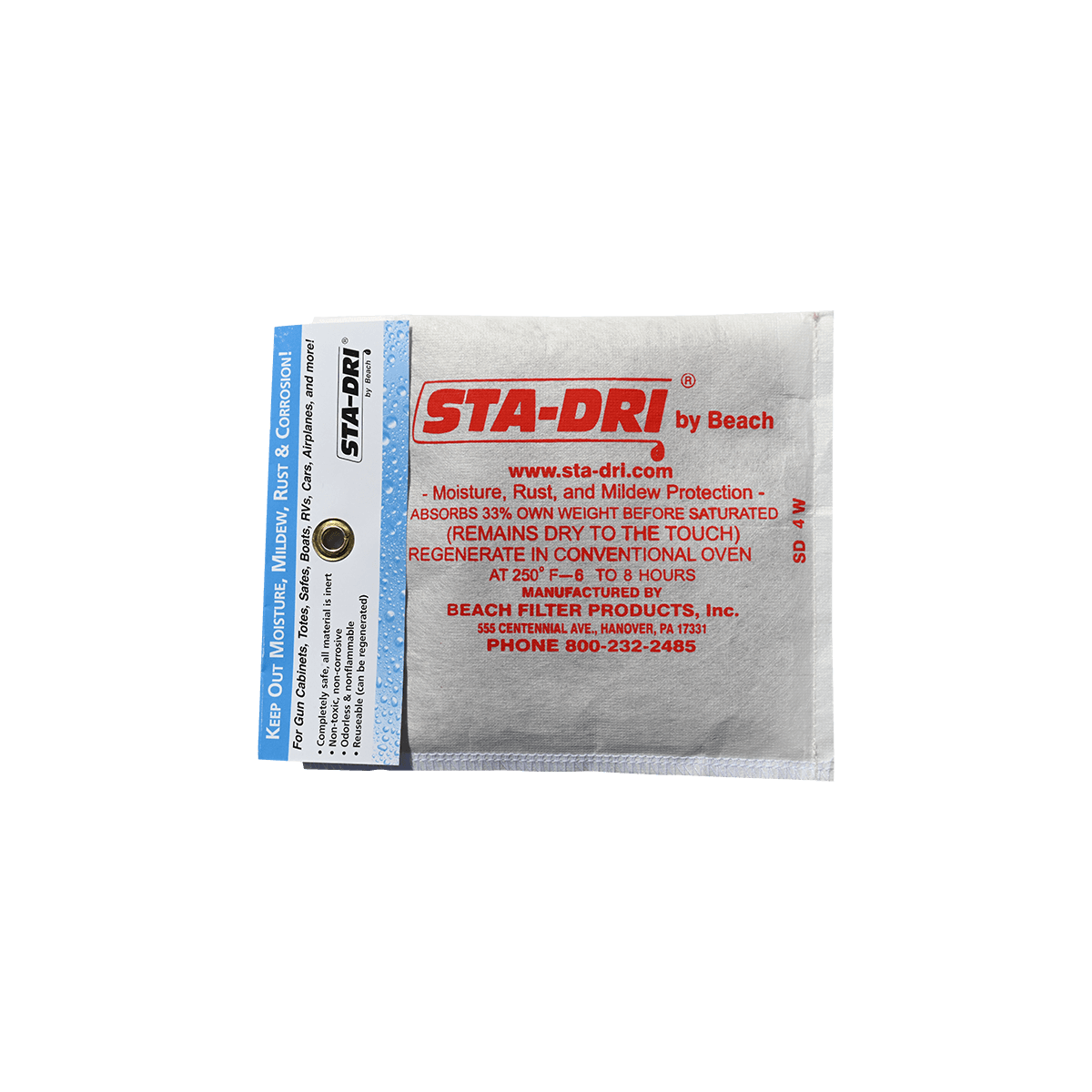
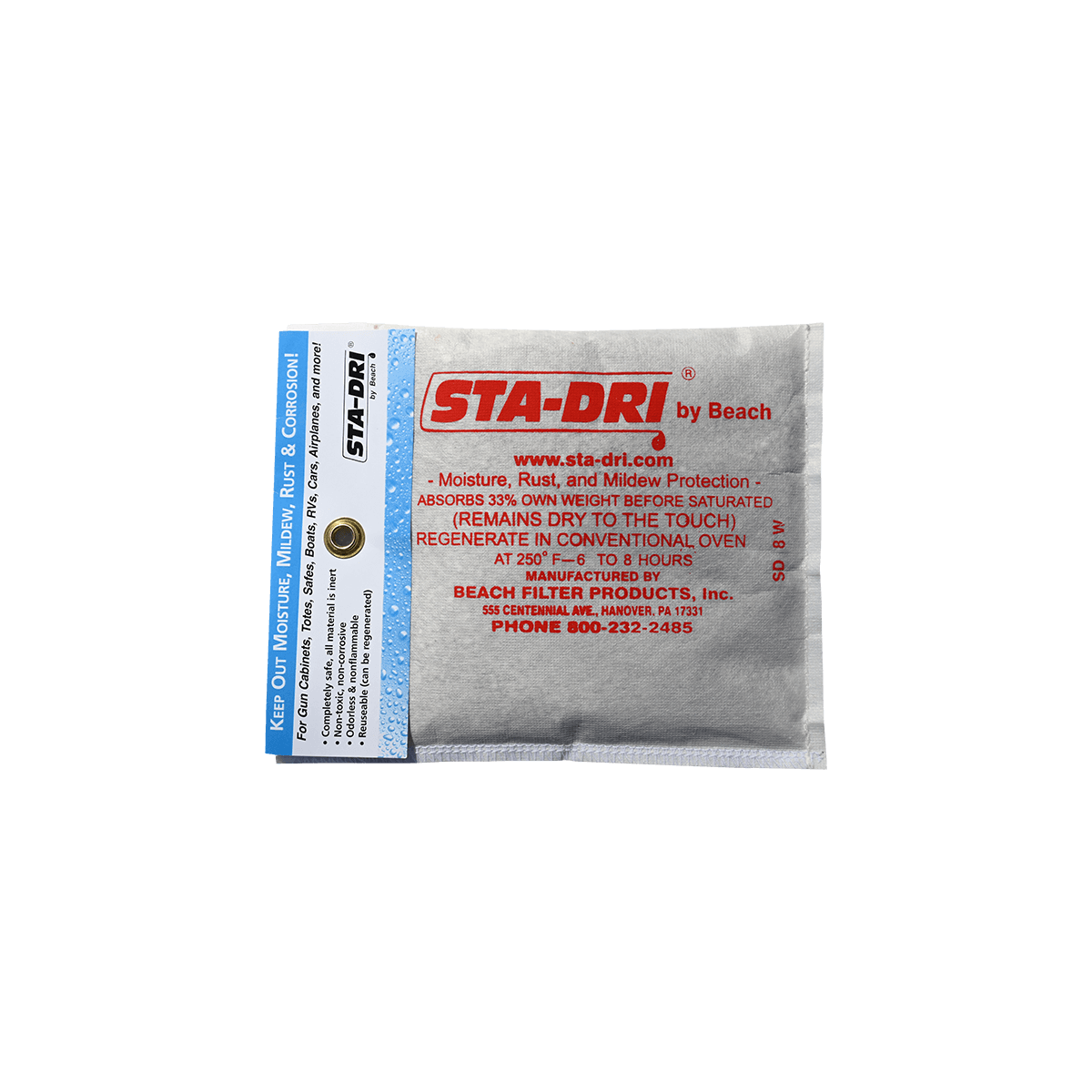
8 Ounce Desiccant Pack - Small
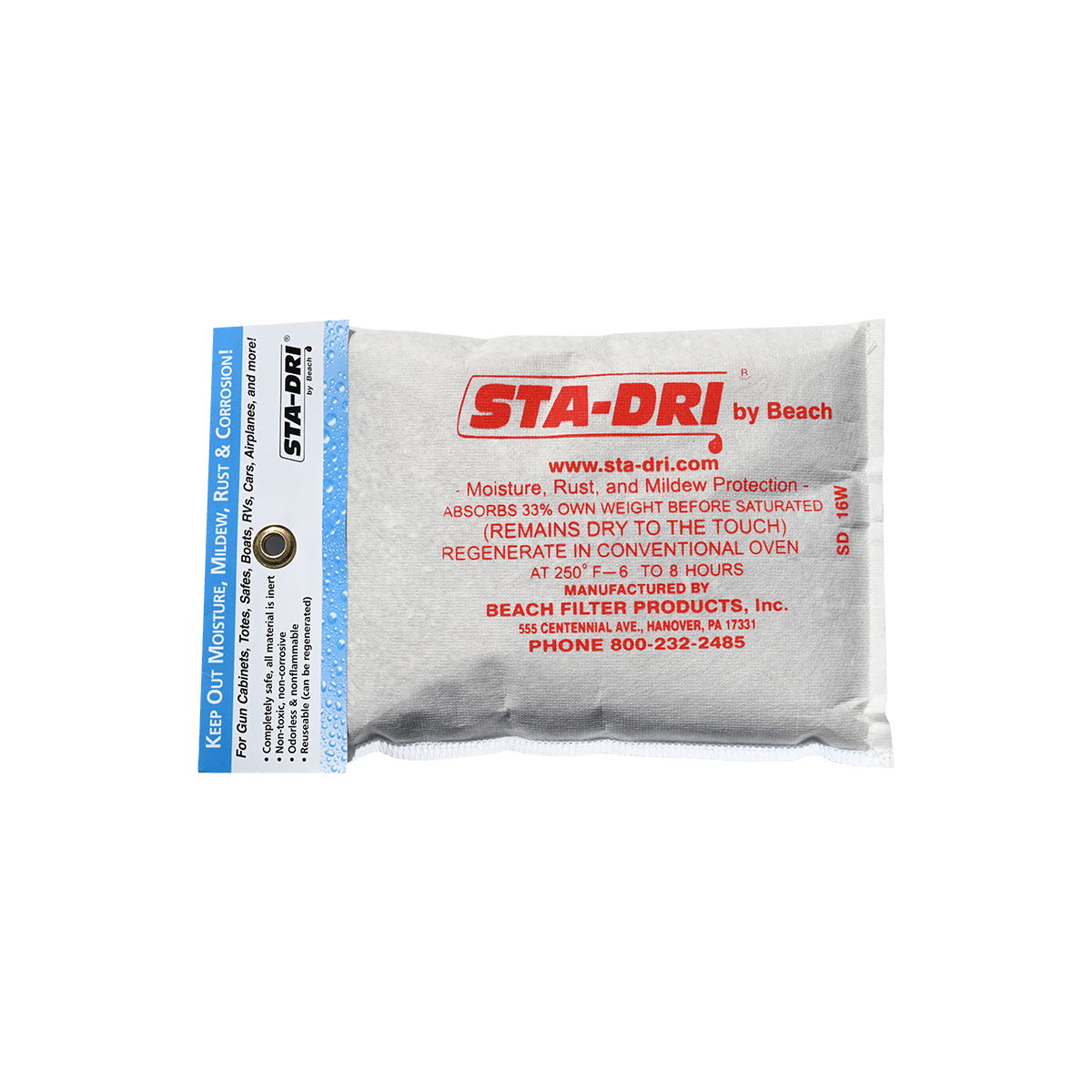
16 Ounce Desiccant Pack - Medium
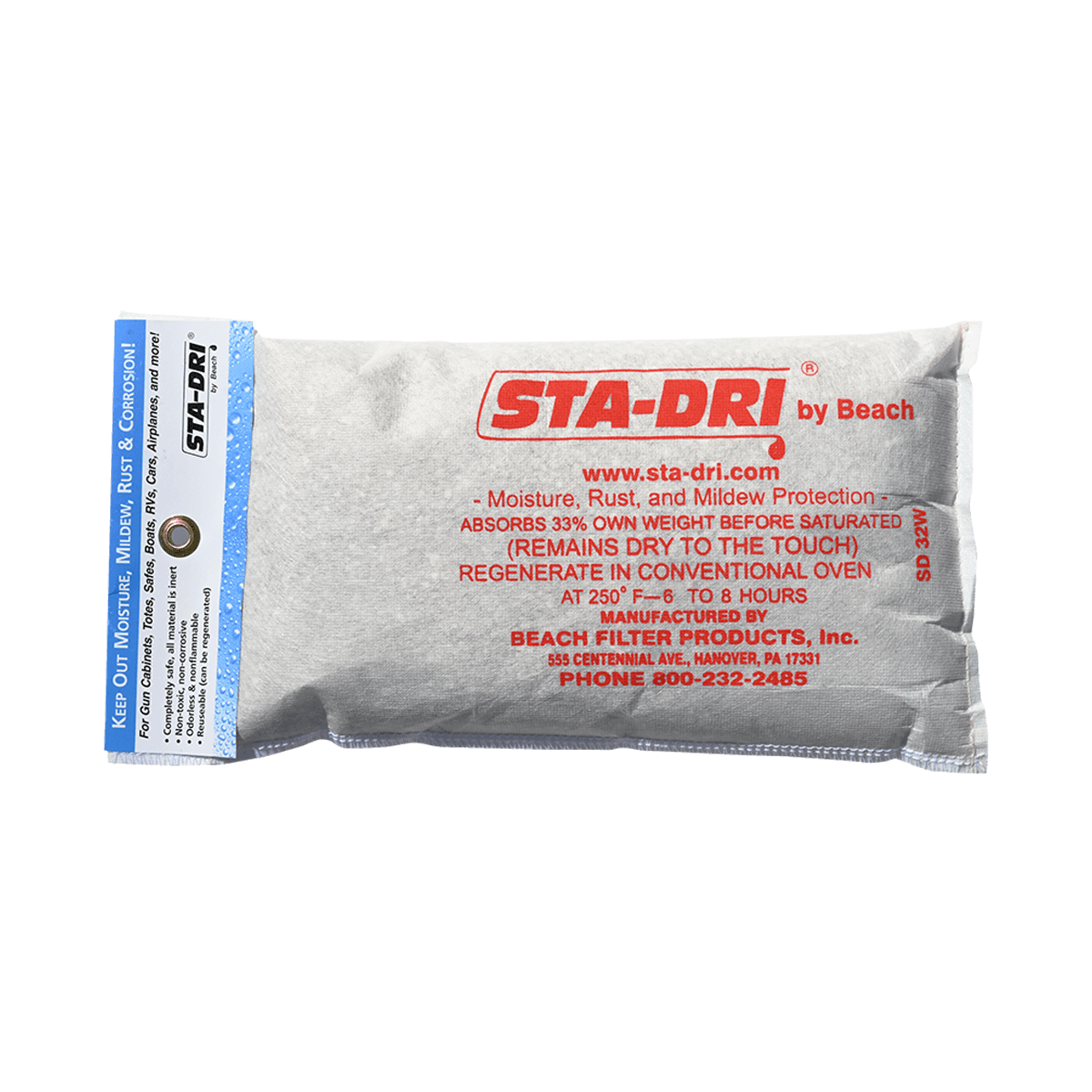
32 Ounce Desiccant Pack - Large
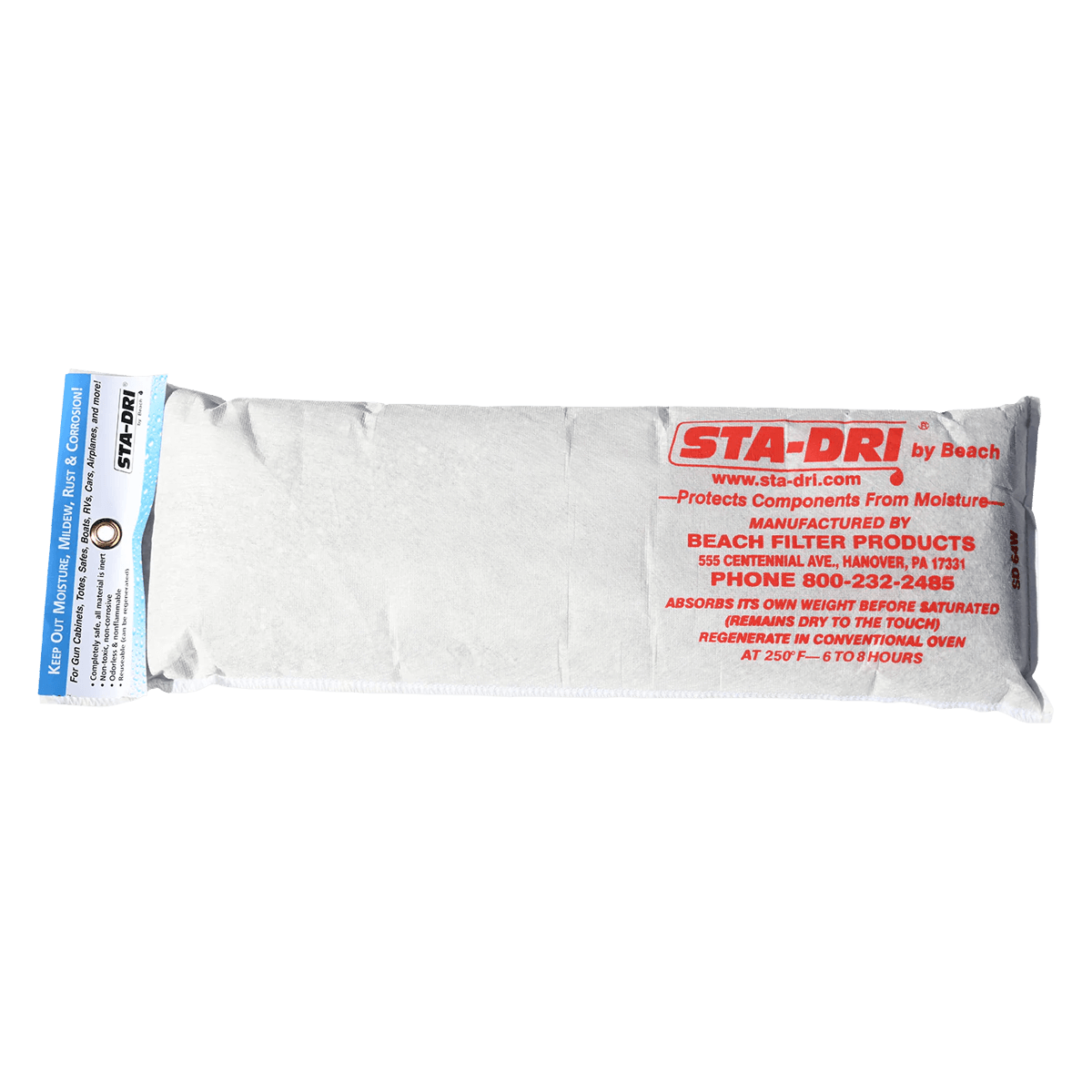
64 Ounce Desiccant Pack - Extra Large
Desiccant FAQ
What is a desiccant packet?
A small permeable pouch holding a granular material — usually silica gel or clay — that adsorbs water vapour from the air sealed in with it. The packet in a shoebox or a vitamin bottle is there to keep the contents' immediate environment dry.
What is the difference between clay desiccant and silica gel?
Silica gel is manufactured and holds more water at high humidity. Clay is mined montmorillonite, costs less, performs well at normal and cooler temperatures, and regenerates at a low enough temperature for a household oven. Both are solid and safe in direct contact with stored goods.
Is desiccant toxic?
Silica gel and montmorillonite clay are both non-toxic and are not meant to be eaten, which is why packets are marked "do not eat." Calcium chloride products are different — they produce a corrosive brine and should be kept away from children, pets and anything they could spill onto.
How long does a desiccant pack last?
Until it saturates, which depends entirely on how humid the space is, how well sealed it is, and how often it's opened. That can be weeks in a damp space or a full season in a dry, tightly sealed one. Adsorbent types can then be dried and reused.
Can a desiccant replace a dehumidifier?
Not for a room. A powered dehumidifier conditions open air continuously; a desiccant treats the finite air sealed inside a container. They solve different problems, and in a damp basement you would reasonably use both — a dehumidifier for the room, desiccant packs inside the boxes.
What does MIL-D-3464 mean?
It is the US military specification covering desiccant performance, packaging and testing for military storage and transport. Industrial and defence buyers use it as a common reference so that desiccant from different suppliers can be compared and specified consistently.