

The RV Dehumidifier That Works With the Power Off
A no-power RV dehumidifier for storage season
An RV spends most of the year closed up and unplugged. That's when the damage happens: moisture works its way into cabinets, under cushions, behind the wall panels, and by spring you open the door to that unmistakable stale-camper smell.
An electric dehumidifier can't help you in storage — it needs shore power and somewhere to drain. Sta-Dri is a passive desiccant dehumidifier: montmorillonite clay in a breathable pouch that pulls moisture out of the air on its own. Set the packs out, lock the door, walk away.
- Winterizing, seasonal storage, or long stretches between trips.
- Cabinets, closets, under dinette benches, and the bunk over the cab.
- Boondocking, where running a dehumidifier off the battery isn't realistic.
- Non-toxic and non-flammable — no bleach, no crystals, nothing to spill on the way to the lake.
How many packs does an RV need?
Size by enclosed volume: 1 pound of Sta-Dri per 13.3 cubic feet. The chart below is a good starting point by coach length. Add a small pack to any closed cabinet or closet you care about — those hold their own damp air regardless of what the main cabin is doing. To size it exactly, use the Sta-Dri calculator.
| NO. OF POUCHES | ||
| 18' to 28' | 3-5 XL Packs | |
| 26' to 28' | 5-7 XL Packs | |
| 30' to 35' | 8-12 XL Packs | |
| 36' to 40' | 10-15 XL Packs | |
| SUV | 2-3 XL Packs |
Using Sta-Dri to winterize an RV
Dry the coach out before you seal it. Packs manage the moisture in the air; they can't fix standing water or an active leak.
- Drain the water system and wipe down the shower, sinks, and fridge.
- Leave interior cabinet and closet doors propped open so air can move between them.
- Pull cushions off the dinette and bed base, or stand them on edge.
- Set XL packs on the floor at each end of the coach, plus a small pack in each closed cabinet, the wardrobe, and any exterior storage bay.
- Prop the fridge door open — a sealed fridge is its own mildew experiment.
Come spring, recharge the packs in your oven and put them away for next season. A spent pack needs no special disposal — the fill is mined montmorillonite clay with no additives or chemicals.
RVS, CAMPERS, TRAILERS, TRUCK CAMPERS, STORAGE BAYS
PICK YOUR PACK SIZE
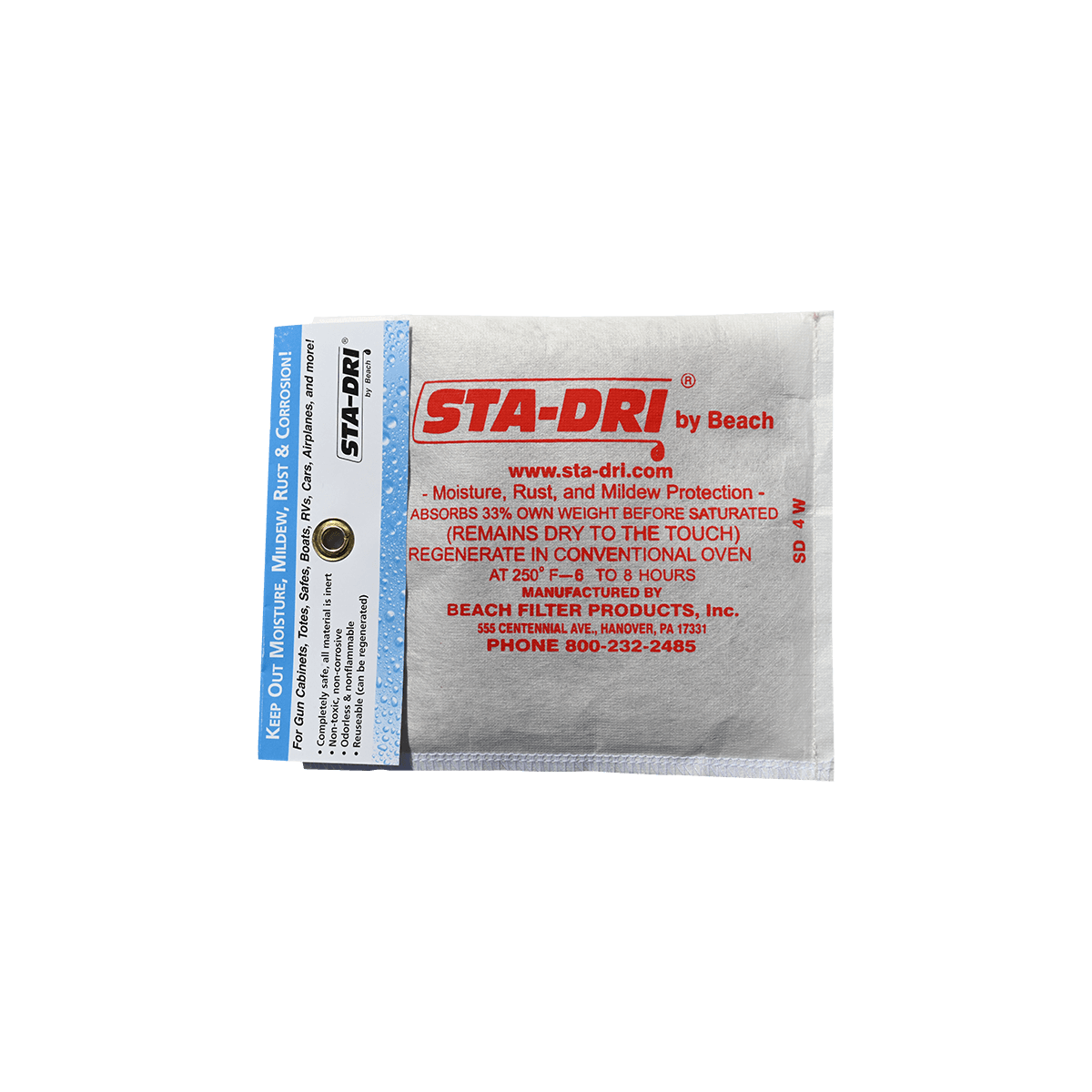
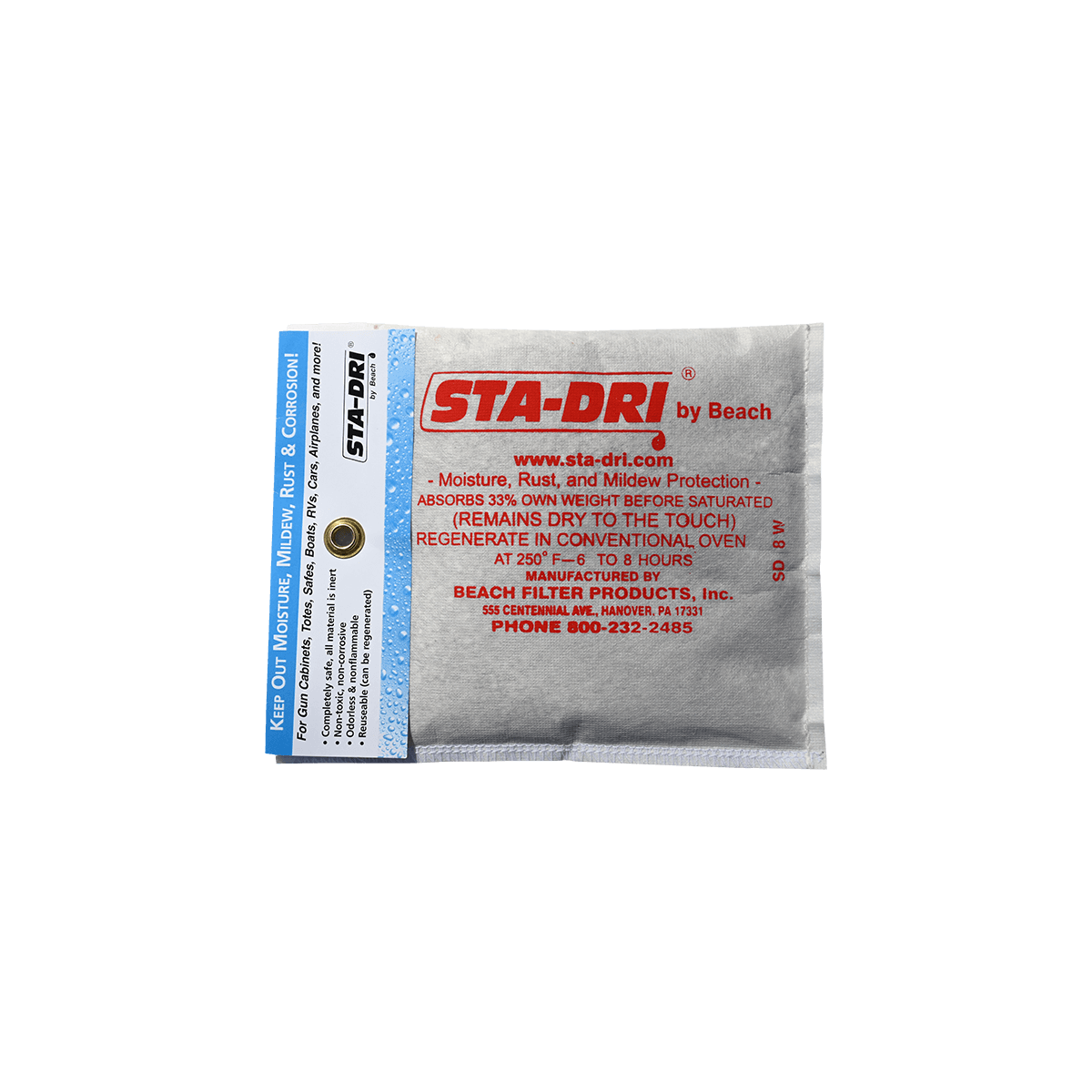
8 Ounce Desiccant Pack - Small
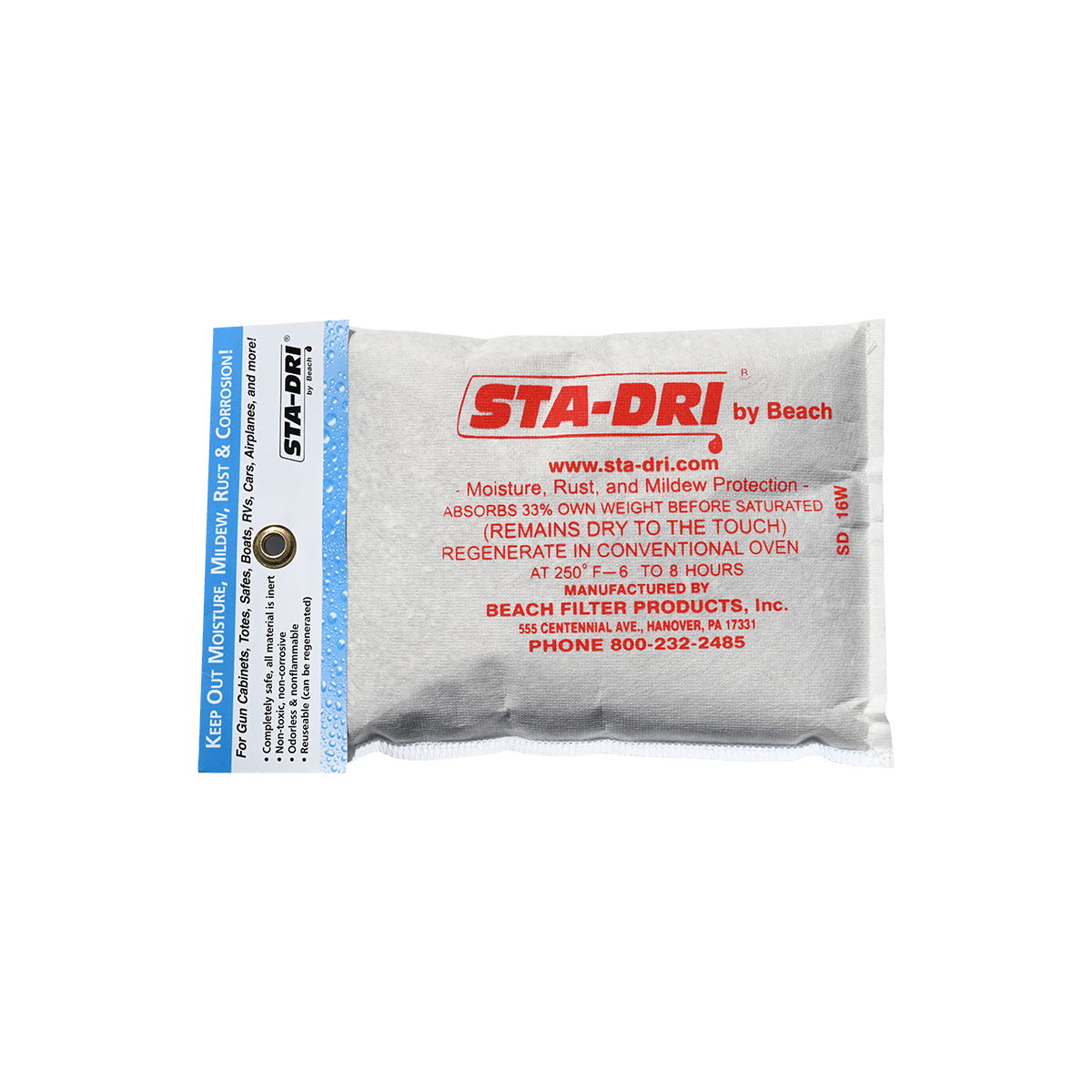
16 Ounce Desiccant Pack - Medium
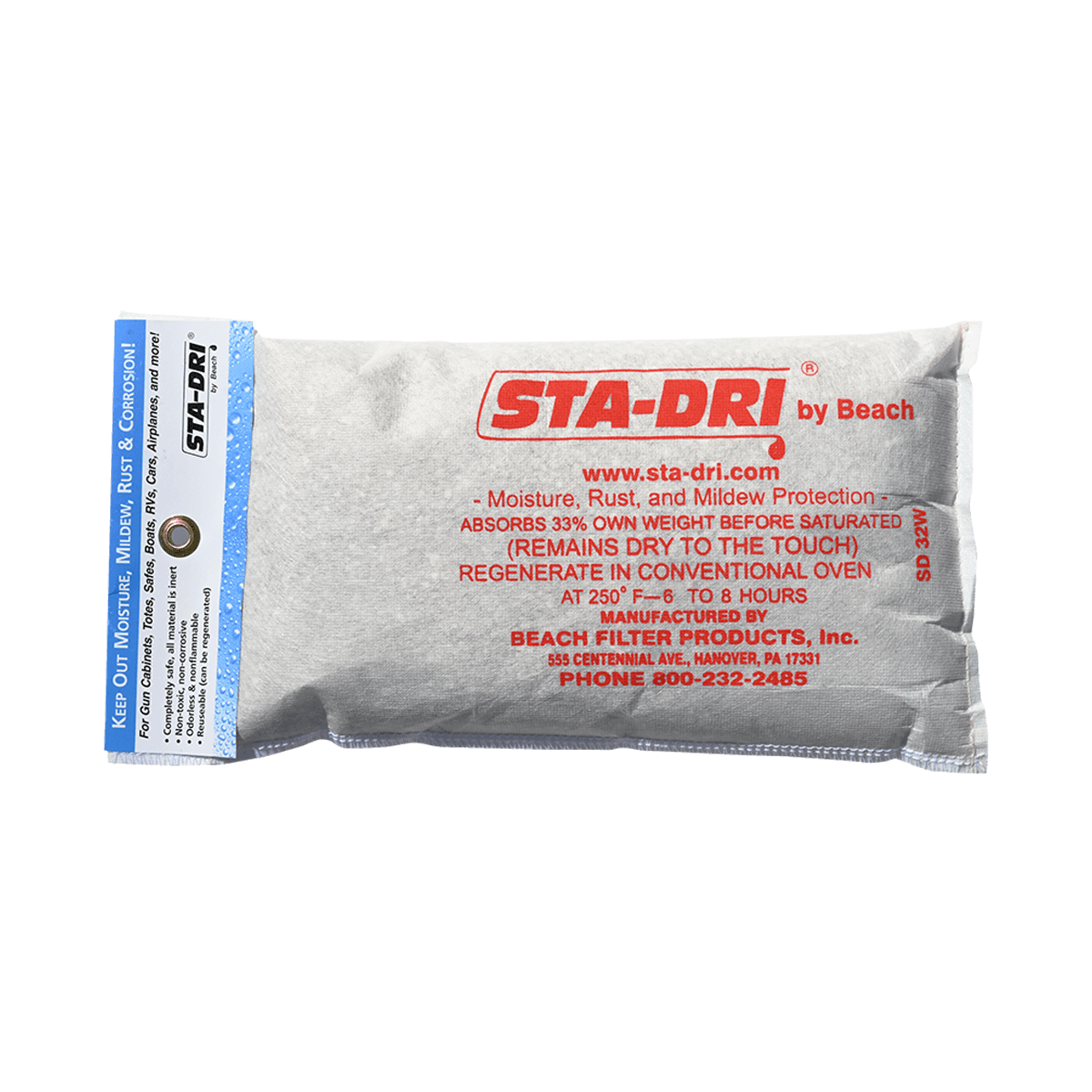
32 Ounce Desiccant Pack - Large
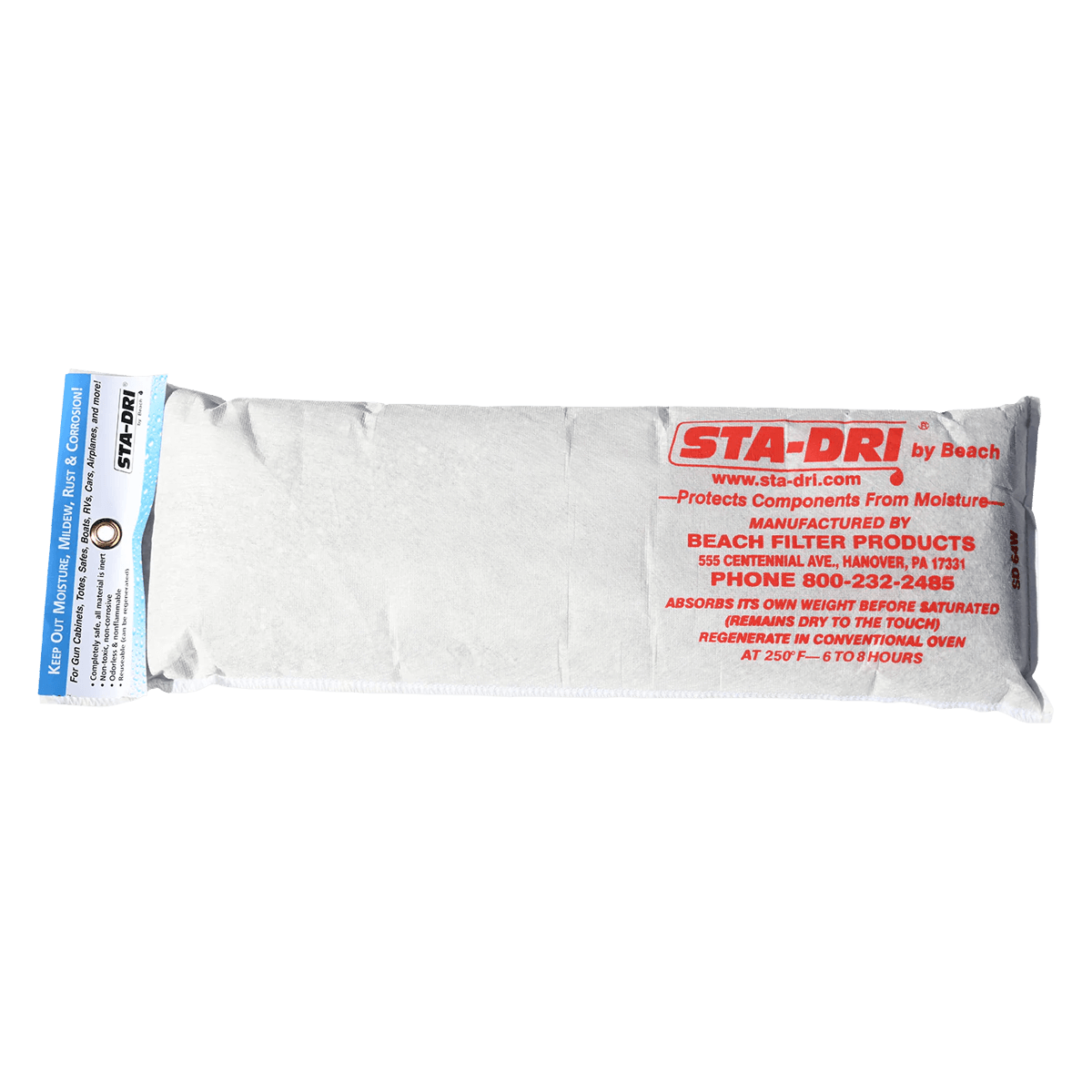
64 Ounce Desiccant Pack - Extra Large
Running a dealership or a storage yard?
Dealers and storage operators winterizing coaches at volume order Sta-Dri in bulk. Tell us how many units you cover and we'll work the quantity and pricing with you.
RV moisture control FAQ
Can you use a dehumidifier in an RV in storage?
Not an electric one — it needs continuous shore power and a place to drain. That's the case for a desiccant dehumidifier: it runs on nothing and keeps working through the whole storage season.
How many desiccant packs do I need for a travel trailer?
Figure 1 pound per 13.3 cubic feet of enclosed space. An 18–28 ft coach typically takes 3–5 XL packs, plus a small pack in each closed cabinet or wardrobe.
How do I stop my camper from smelling musty over the winter?
That smell is mildew feeding on trapped humidity. Dry the coach out, prop interior cabinet doors and the fridge open so air can circulate, and put desiccant packs at both ends of the cabin before you lock it up.
Will the packs leak or stain upholstery?
No. The fill is solid montmorillonite clay, not a gel or a deliquescent salt, so there's no liquid to pool. The pouches are safe in direct contact with cushions and cabinetry.
Do they work in an unheated storage lot?
Yes. Clay desiccant is passive and doesn't depend on temperature the way a compressor dehumidifier does. It also won't freeze.
How often do the packs need recharging?
Usually once a season, depending on your climate. Dry them in a conventional oven and reuse them. See the recharging instructions.