
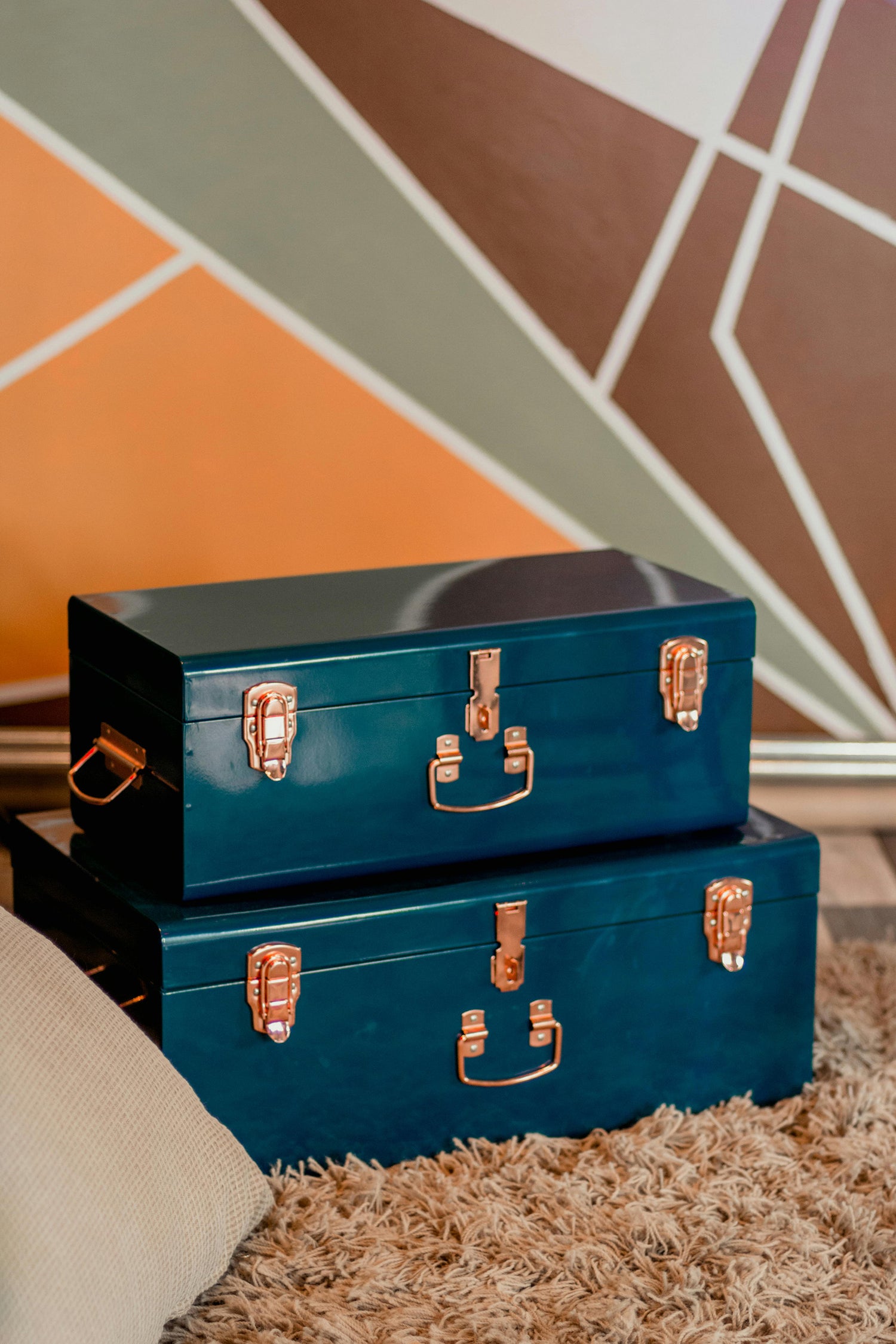
A Non-Electric Dehumidifier for Closets, Cases and Storage Bins
For enclosed spaces, not open rooms
Sta-Dri works on the air inside a closed space — a bin, a case, a wardrobe, a cabinet. It is not a room dehumidifier and won't replace one. If your basement is damp, a plug-in dehumidifier is the right tool for the room. Sta-Dri is what protects the boxes stacked against the wall, which that dehumidifier never reaches.
The distinction matters because most of what actually gets ruined is inside something sealed: a storage bin holds its own damp air no matter what the room is doing, and the smaller and tighter the space, the better a desiccant performs.
- Storage bins, totes and cardboard boxes.
- Closets, wardrobes and linen cupboards.
- Hard cases, trunks, footlockers and garment bags.
- Display cases, safes, drawers and sealed cabinets.
- Collectibles — photos, documents, coins, comics, textiles, instruments.
How much do you need?
Work from the volume of the container, not the room: 1 pound of Sta-Dri per 13.3 cubic feet. A 32 oz pack is 2 lbs and covers about 26.5 cubic feet — roughly a small closet or a stack of storage bins. Treat each sealed container separately. To size it exactly, use the Sta-Dri calculator.
| NO. OF POUCHES | ||
| Small Container ~ 7 cu ft | 2 Small Packs | |
| Medium Container ~ 15 cu ft | 1 Medium Pack | |
| Large Container ~ 30 cu ft | 2 Large Packs | |
| Document Safe ~ 7 cu ft | 2 Small Packs | |
| Larger Safes ~ 15 cu ft | 1-2 Medium Packs |
Where to put packs first
If you're only buying a few, these earn their keep fastest:
- Sealed bins on a concrete floor. Concrete wicks moisture and the bin traps it. This is where photos and paperwork die.
- The closet on an exterior wall. Coldest surface in the house, door shut most of the year.
- Anything in a garment bag or hard case. Leather, wool, instruments, camera gear.
- Boxes in an off-site storage unit. No power, no ventilation, nobody checking. Put the packs inside the boxes, not loose in the unit.
Dry the contents before you seal them. A pack manages the air in a container — it can't pull water back out of a damp box, and it won't stop water coming through a wall.
STORAGE BINS, CLOSETS, CASES, TRUNKS, CABINETS
PICK YOUR PACK SIZE
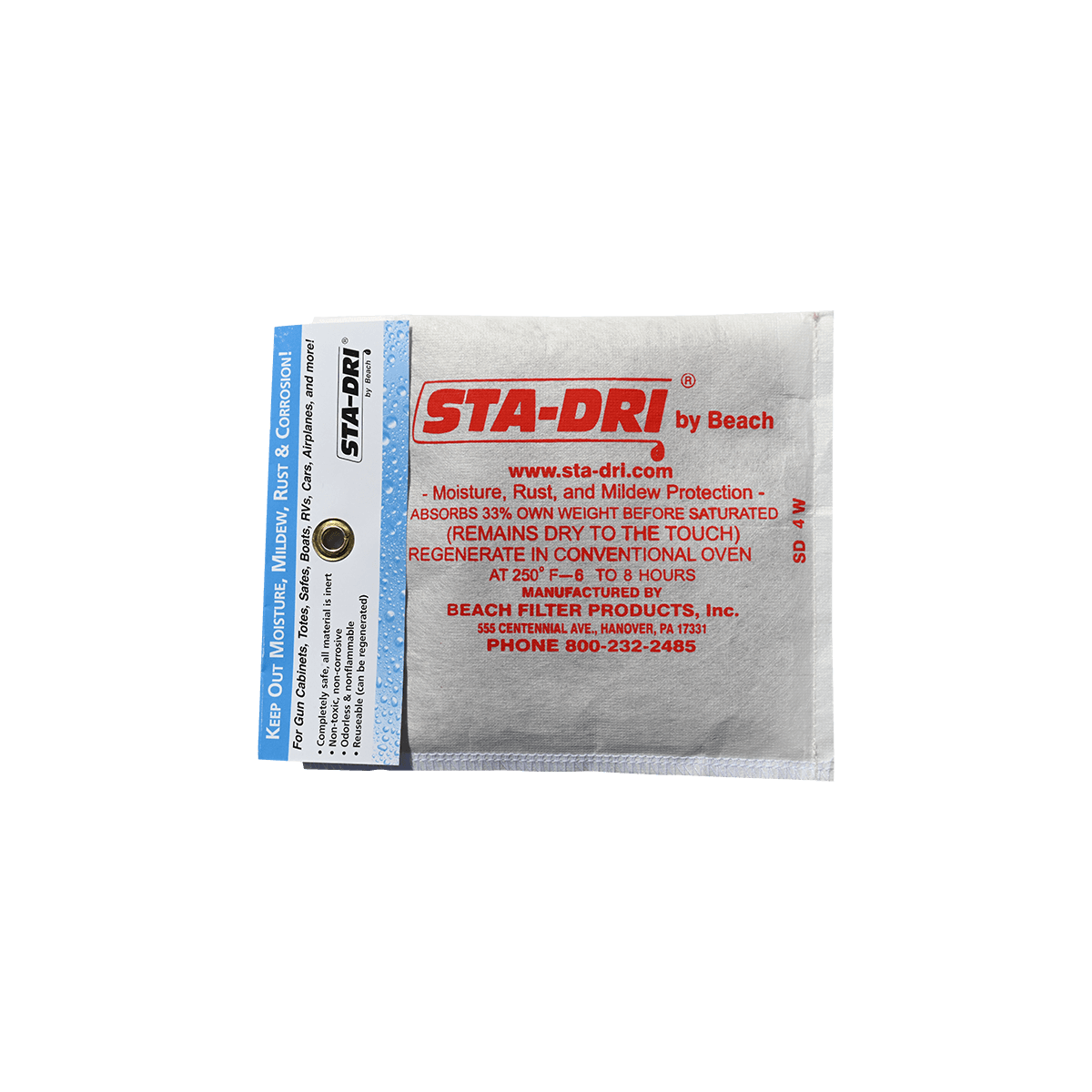
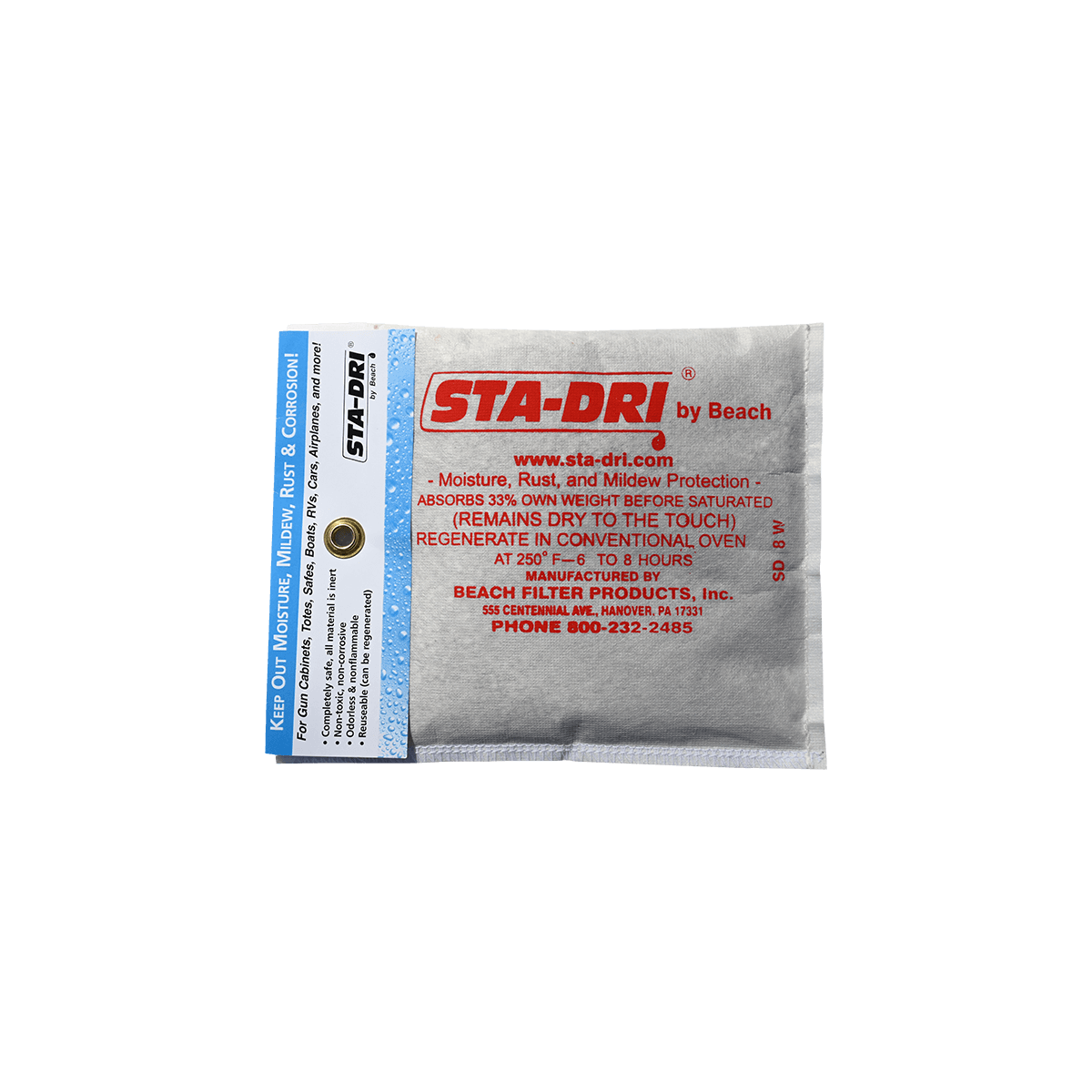
8 Ounce Desiccant Pack - Small
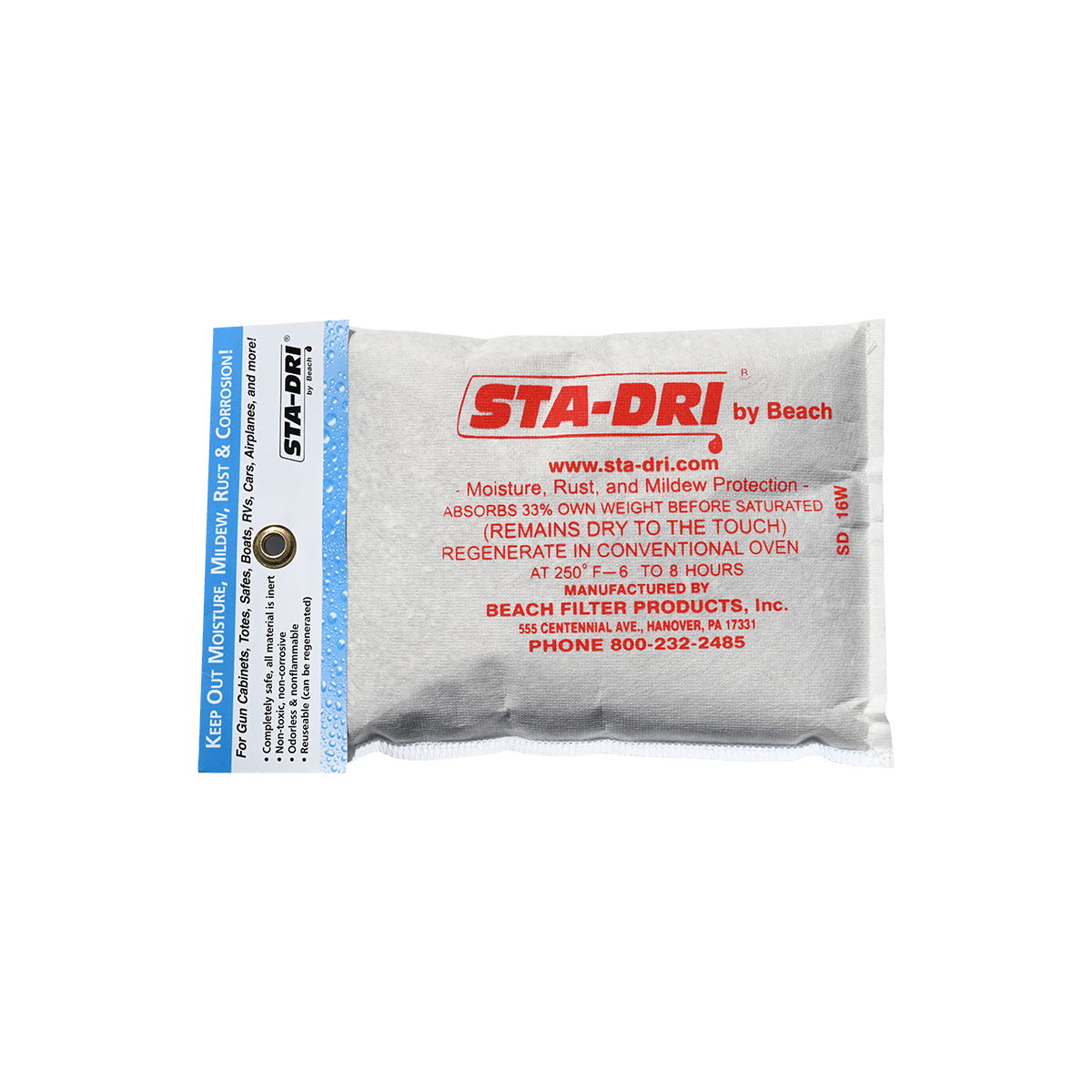
16 Ounce Desiccant Pack - Medium
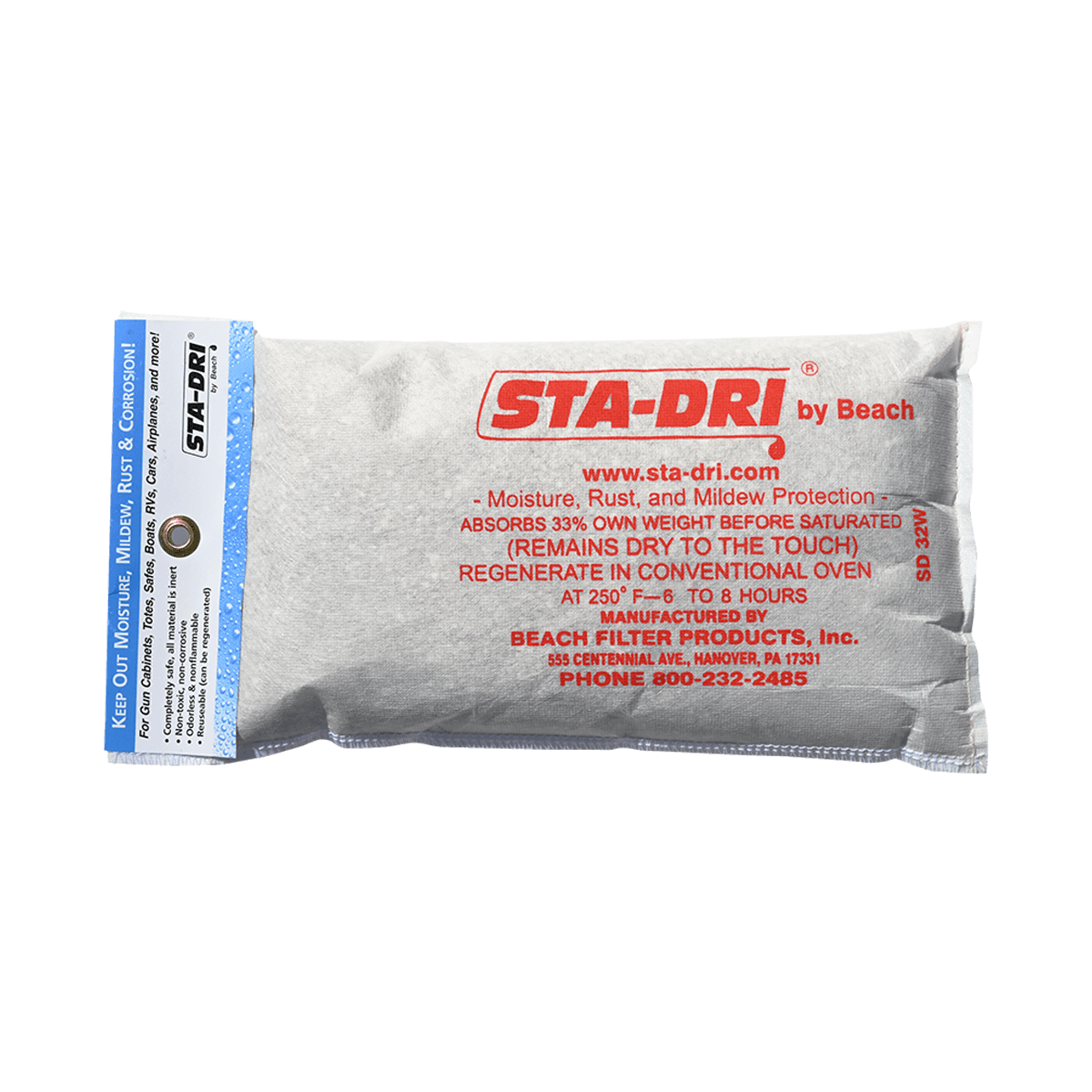
32 Ounce Desiccant Pack - Large
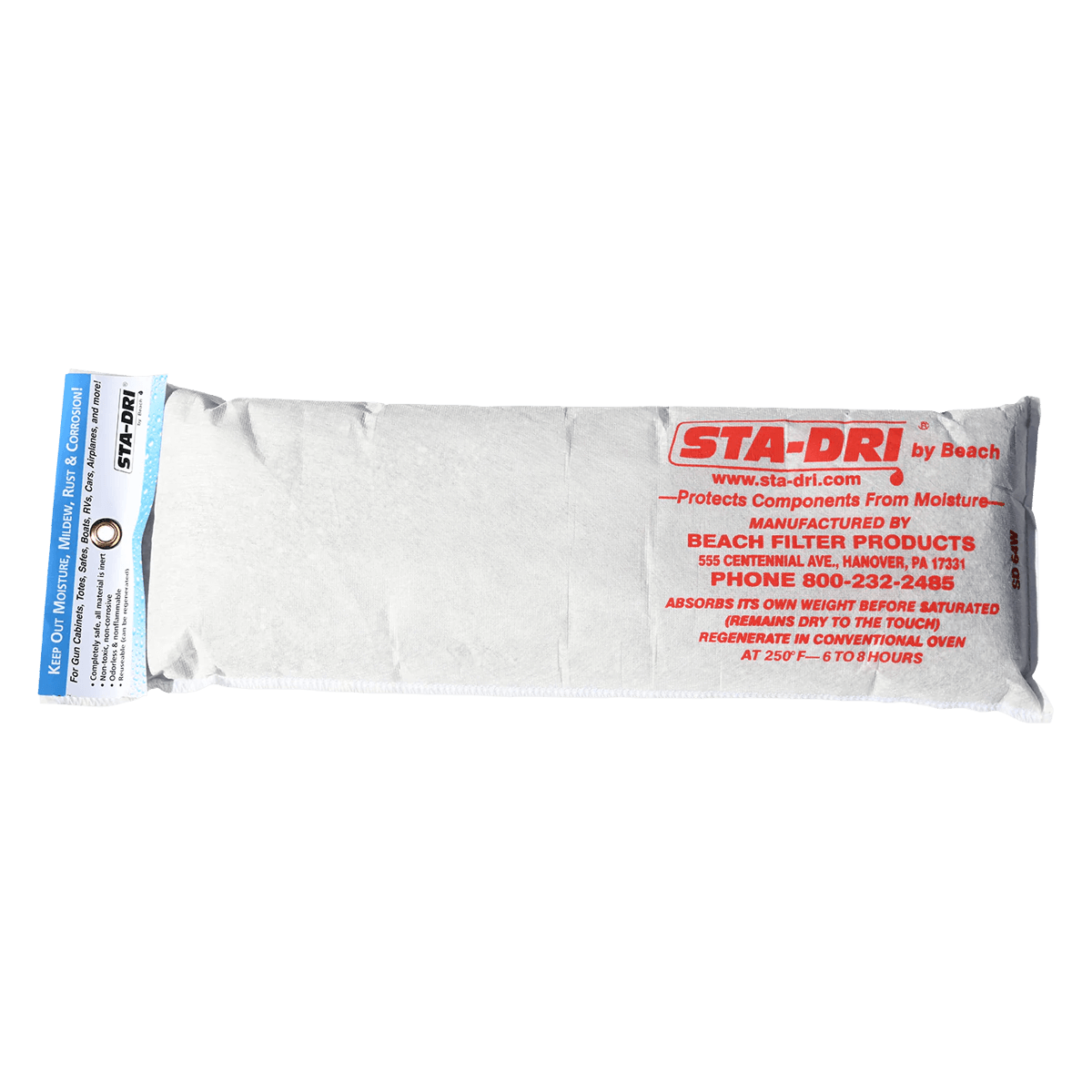
64 Ounce Desiccant Pack - Extra Large
Storing product for a business?
Warehousing, crating, and distribution customers order Sta-Dri in bulk for product held in cartons, crates and containers. Tell us what you're storing and we'll price it.
Home storage moisture FAQ
Is there a dehumidifier that works without electricity?
Yes — a desiccant dehumidifier. It absorbs moisture chemically rather than condensing it with a compressor, so it needs no power, no drain and no emptying. The tradeoff is that it saturates and has to be dried out before reuse.
How do I keep a closet from smelling musty?
That smell is mildew growing on trapped humidity. Empty and dry the closet, leave a gap between clothes and the exterior wall, and put a desiccant pack on the shelf. Keeping the door ajar helps, but on an exterior wall it usually isn't enough on its own.
Can I use desiccant packs in a storage unit?
Yes, but put the packs inside the bins and boxes rather than loose in the unit. A storage unit is an open room — a pack sitting on the floor is trying to treat far more air than it can handle. Inside a sealed tote it works exactly as intended.
Can Sta-Dri replace a basement dehumidifier?
No. Sta-Dri is for enclosed spaces — bins, closets, cases, cabinets. A damp basement is an open room and needs a plug-in dehumidifier, and water coming through a foundation wall is a drainage problem before it's a humidity one. Use a room dehumidifier for the room, and Sta-Dri for what's boxed up inside it.
Are they safe around photos, documents and clothing?
Yes. The fill is pure montmorillonite clay with no additives, and unlike deliquescent salt products there's no liquid to pool and stain. The pouches are safe in direct contact.
How often do I need to recharge them?
Typically every few months, depending on how damp the space is. Dry them in a conventional oven and reuse them — up to three cycles per pack. See the recharging instructions.